How to Fix a Lighter That Won't Light (Butane, Zippo, BIC)
Quick answer: A butane lighter that sparks but won’t flame is almost always air-locked — the tank is full of air, not fuel. Bleed it empty with a small screwdriver until it stops hissing, then refill with the can inverted. That one fix accounts for more dead lighters than every other cause combined. If the flame is weak and sputtering instead, the jet is clogged with residue from cheap butane and needs a blast of compressed air.
Lighters fail in a small number of predictable ways, and the repair depends entirely on which kind of lighter you have. Sort that out first.
Which Lighter Do You Have?
| Type | How it makes a spark | Fuel | Worth repairing? |
|---|---|---|---|
| Refillable butane / torch | Piezo or flint wheel | Butane, refillable | Yes — most faults are 2-minute fixes |
| Disposable (BIC-style) | Flint wheel | Butane, sealed | Rarely — the flint isn’t user-serviceable |
| Zippo-style wick | Flint wheel | Naphtha fluid | Yes, and Zippo repairs it free for life |
| Electric arc / plasma | Electrodes, battery | None (USB charging) | Sometimes — usually a battery issue |
| Piezo gas lighter (stove/BBQ) | Piezo crystal | Butane, refillable | Yes, but they’re cheap to replace |
If yours is a Zippo, stop here and read the Zippo repair guide instead — the parts, the procedure, and the free lifetime repair service are all specific to that design.
Fixing a Refillable Butane Lighter
Problem 1: Sparks, but no flame (the air-lock)
This is the classic. Butane tanks hold pressurised liquid fuel, and any air trapped in the tank sits at the top, right where the valve draws from. The lighter feels heavy, the piezo clicks, the spark is fine — and nothing burns, because the valve is releasing air.
The fix — bleed and refill properly:
- Turn the flame adjuster to its lowest setting.
- Hold the lighter away from your face and press the refill valve on the bottom with a small flathead screwdriver or a ballpoint pen tip. You’ll hear a hiss. Keep pressing until it stops completely — that’s fuel and air both gone. Do this outdoors or by an open window.
- Now refill: hold the lighter upside down so the valve points up, hold the butane can inverted above it, seat the nozzle squarely on the valve and press firmly for 4–5 seconds. The can must be upside down — that’s what delivers liquid butane instead of vapour.
- Wait two to three minutes. Refilling chills the tank sharply, and cold butane won’t vaporise properly. Lighting it immediately is why people conclude the refill “didn’t work” and bleed it all over again.
- Turn the flame adjuster back up gradually.
Zippo publishes the same routine for its own butane inserts: purge, refill in 5–6 second bursts, and wait at least two minutes.
Full step-by-step with the common mistakes is in our guide to filling up a gas lighter.
Problem 2: Weak, sputtering or lopsided flame
The jet is partially blocked. This is nearly always down to fuel quality: cheap unrefined butane leaves oily residue that builds up in an orifice measured in fractions of a millimetre.
- Blow compressed air through the jet in short bursts, from the top down and then from underneath.
- Don’t poke it with a pin or a needle. The orifice is precision-drilled and widening it permanently ruins the flame shape.
- Refill with 5x-refined butane from then on. The price difference over a year is trivial compared with the lighters it saves.
- On a multi-jet torch lighter, one dead jet out of three is the same problem — clean all of them.
Problem 3: No spark at all
On a piezo lighter, the button should give a firm click you feel through your thumb. If it clicks properly but produces no visible arc, the electrode wire has usually come loose or its insulation has failed — which is also the cause of the zap some gas lighters give you. That’s a replace-it fault, not a repair-it one.
On a flint-wheel refillable, the flint is a consumable. Unscrew the retaining screw at the base, tip out the stub, drop in a new flint and refit the spring. If the sparks are just weak, the wheel is packed with flint dust — scrub the knurling with a stiff toothbrush before you blame the flint.
Problem 4: It works indoors but not outside in the cold
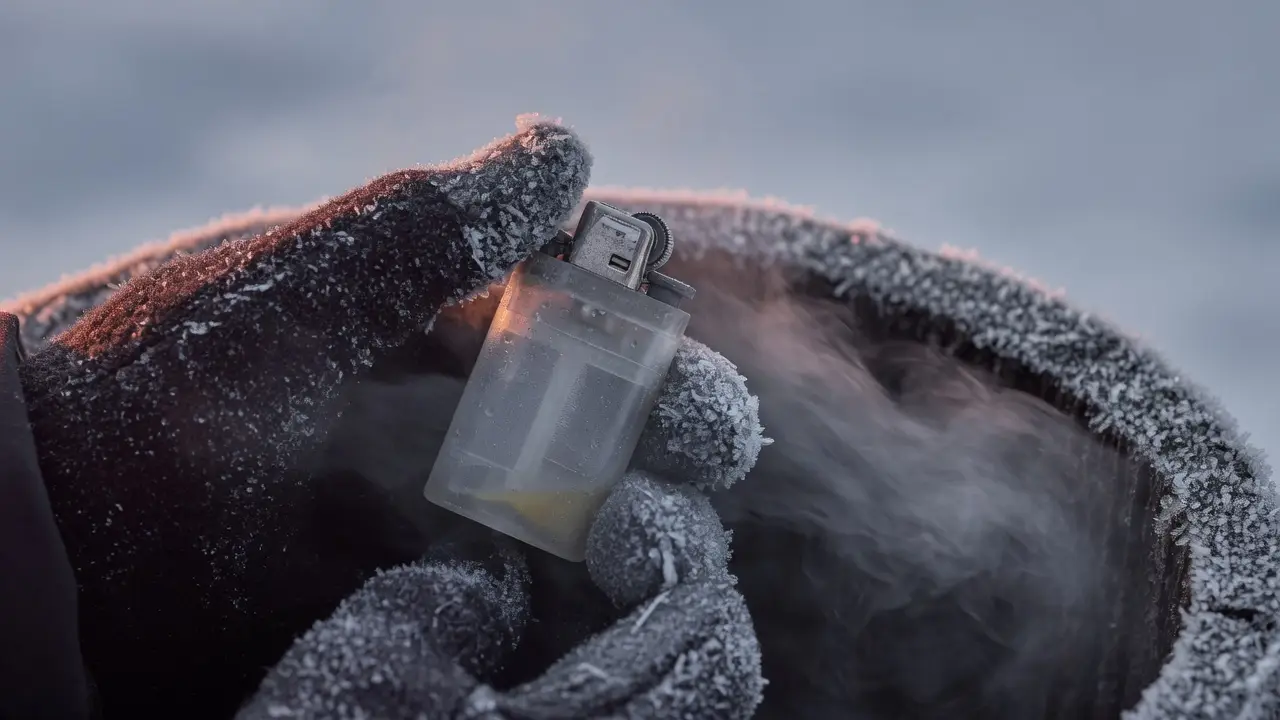
This isn’t a fault. Butane boils at about −0.5 °C (31 °F) (PubChem), and below roughly 4 °C (40 °F) it stops generating enough vapour pressure to feed the jet. Warm the lighter in a closed fist or an inside pocket for a minute and it will light. (Disposable BICs run on isobutane, which boils at about −12 °C / 11 °F, so they keep working in much colder weather than an n-butane refillable.)
If you need reliable cold-weather ignition, the fix is a different tool rather than a repair: an electric arc lighter has no fuel to vaporise, so cold doesn’t stop it sparking (its battery does run down faster in freezing weather, like any lithium cell). See our best arc lighters guide.
Problem 5: Flame too tall, or won’t turn down
The adjuster wheel — usually marked with a +/− or a tortoise-and-hare — has slipped past its stop. Turn it fully to minimum, then back up a quarter-turn at a time. A flame that stays enormous at the lowest setting means the valve seat is worn, and a lighter that can’t throttle its own flame is one to retire.
Disposable Lighters: When to Stop
A BIC-style disposable is designed as a sealed unit. The flint sits under a crimped metal hood, the tank has no fill valve, and both are meant to run out together. You can pry the hood off and get to the flint, and plenty of people do — but you’re working millimetres from a pressurised butane tank with hand tools, for a lighter worth about a dollar.
The one thing genuinely worth knowing: if a new disposable feels stiff and sparks poorly, that’s the child-guard band over the wheel doing its job, not a fault. Push harder with the pad of your thumb rather than the tip.
Two faults that mean bin it immediately, on any lighter:
- A cracked tank or a hissing you can’t stop. Leaking butane is heavier than air and pools. Get it outside.
- A lighter that stays lit after you release the button. The valve isn’t sealing. Nothing about that is repairable.
The same caution applies to fuel-soaked wick lighters — see can a Zippo explode? for what actually causes the accidents people worry about.
Arc Lighters
There are no consumables to replace, so the failure modes are electrical:
- Won’t hold charge — the internal cell has aged out. Most arc lighters are rated for a few hundred cycles, and the cell isn’t designed to be replaced.
- Arc fires but won’t ignite anything — the electrodes are fouled with soot or tar. Wipe them with a cotton bud and isopropyl alcohol, let it dry fully, and try again. This restores far more “dead” arc lighters than people expect.
- Nothing at all when charged — the safety cutout that kills the arc when the lid closes has failed. Not user-serviceable.
Preventive Maintenance
- Buy refined butane. 5x-filtered fuel is the single highest-return habit for anyone with a torch lighter.
- Bleed before every refill, not just when there’s a problem. It takes ten seconds and prevents the air-lock entirely.
- Store lighters upright and out of hot cars. Heat drives pressure up and shortens the life of every seal in the lighter.
- Keep a spare flint card with your refillables. They cost pennies and always run out at the wrong moment.
- Don’t run a butane lighter’s tank fully dry if you can avoid it — a near-empty tank draws more air in on the next fill.
For how long a tankful should actually last before any of this becomes relevant, see how long does a gas lighter last?, and inside a gas lighter for what all these parts are doing.
FAQ
My lighter is full but won’t light. What’s wrong? Air in the tank. Bleed it completely with a screwdriver until the hissing stops, refill with the can inverted, and wait two to three minutes before striking.
Why does my new butane refill not work? Either the can was held upright (delivering vapour instead of liquid), or you lit it immediately while the tank was still chilled from filling. Both are fixed by refilling upside down and waiting.
Can I use any butane in any lighter? Chemically yes, practically no. Unrefined butane clogs jets. Use 5x-refined fuel in torch lighters especially, and never put butane in a standard Zippo insert — that needs naphtha.
How do I fix a lighter with a weak flame? Clear the jet with compressed air, not a pin. Then check the flame adjuster hasn’t drifted to minimum.
Is it worth repairing a disposable lighter? No. The flint sits under a crimped hood next to a sealed pressurised tank, and the lighter costs about a dollar. Repair refillables; replace disposables.
Why does my lighter only work indoors? n-Butane boils near freezing, so below about 40 °F a refillable butane lighter doesn’t have enough vapour pressure to feed the jet (isobutane disposables like BIC hold out to around 11 °F). Warm it in your hand, or switch to an arc lighter for cold weather.