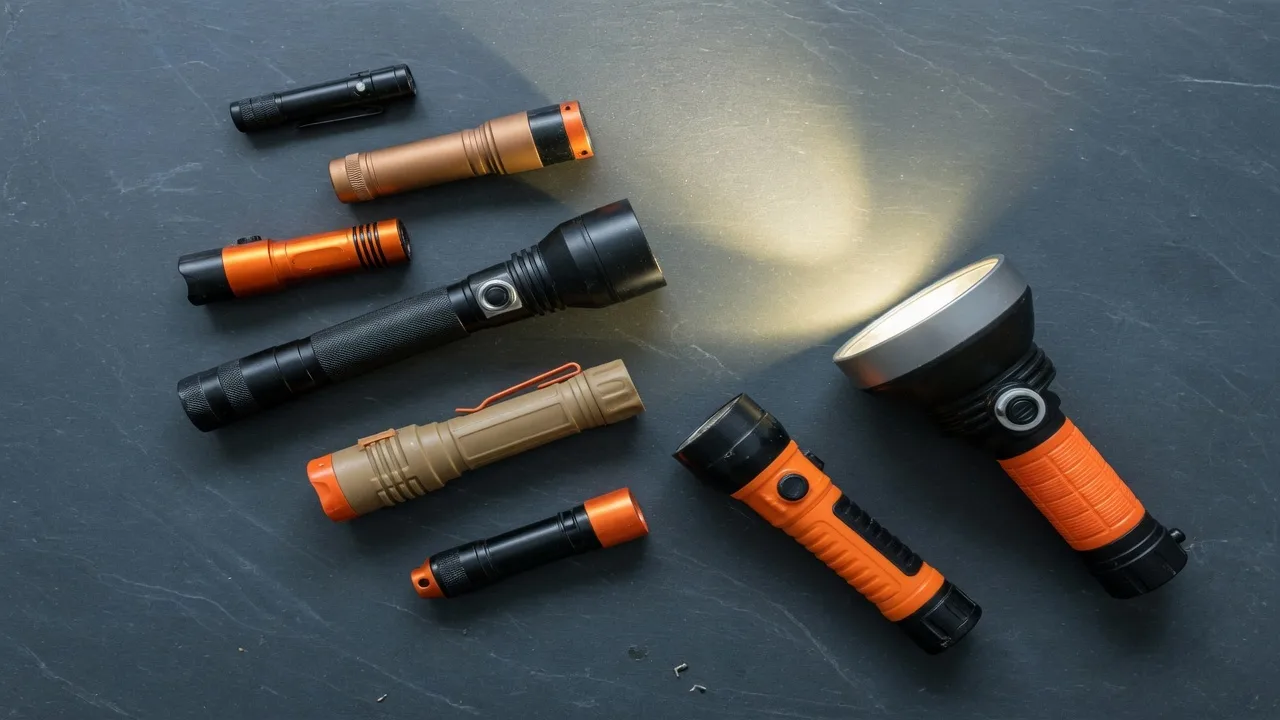
Best Flashlight Brands (2026): 9 Worth Buying and Who Each Is For
Quick answer: No single brand is best at everything, but four cover almost every need. Fenix is the best all-rounder (start with the PD36R V2.0). Streamlight is the best value for work and duty (the Stinger 2020). SureFire is the premium tactical pick (the EDCL2-T). On a tight budget, Wurkkos (the FC11C) is the cheap brand worth trusting.
Search Amazon for “flashlight” and you’ll see hundreds of brand names. The nine below have a track record, publish full specs and put a warranty in writing. We compared them on published specs and each maker’s own warranty terms, not on reputation alone. If you’re already down to Olight, Fenix or Streamlight, our Olight vs Fenix vs Streamlight comparison goes model by model.
The Best Flashlight Brands at a Glance
| Brand | Best for | Typical price | Warranty on the light | Pick to start with |
|---|---|---|---|---|
| Fenix | All-round outdoor and home use | $40–$120 | 5 years free repair, then you pay for parts only | PD36R V2.0 |
| Streamlight | Work, duty, value | $20–$80 | Limited lifetime (2 years on rechargeable batteries, chargers, switches, electronics) | Stinger 2020 |
| Olight | Everyday carry, magnetic charging | $35–$150 | Lifetime on US purchases since Jan 2023 (2 years on rechargeable batteries) | Baton 4 Pro |
| SureFire | Premium tactical | $80–$300 | Lifetime (2 years on rechargeable batteries and chargers) | EDCL2-T |
| Nitecore | Slim, high-output EDC | $40–$150 | 5 years (2 years if the battery is built in), then you pay for parts only | P20iX |
| Acebeam | The brightest lights | $35–$420 | 10 years free repair, then you pay for parts and shipping | E75 |
| Maglite | Simple lights on AA or D cells | $25–$50 | 10-year limited | ML300LX |
| Wurkkos | Budget enthusiast lights | $20–$60 | 1 year | FC11C |
| Klarus | Dual-switch tactical lights | $50–$130 | 5 years on current tactical models | XT11GT Pro |
Prices are approximate street prices for each brand’s mainstream lights and move with sales. Warranty details and sources are in each section below.
1. Fenix: Best All-Round Flashlight Brand
Founded: 2001, Shenzhen, China · Best for: camping, hiking, power cuts, one light for everything
Fenix makes sensible, well-sealed lights on standard rechargeable cells and publishes full runtime figures. The PD36R V2.0 is the template: 1,700 lumens, a 396 m beam, IP68 sealing, 18 W USB-C charging and a standard 21700 battery, for $99.95 at Fenix’s US store.
Warranty: Fenix gives 15-day replacement and five years of free repair (two years for lights with a built-in battery, one year on batteries and chargers), then repairs for life at the cost of parts, with no labor charge. Fenix Lighting, the US distributor, sells this as a limited lifetime warranty.
Weak spots: rarely the cheapest option, and the designs are plain.
2. Streamlight: Best for Work, Duty and Value
Founded: 1973, Eagleville, Pennsylvania · Best for: police, trades, vehicles, beater lights
Streamlight is the most common brand on US police belts (more in what flashlights police use) and is often cheaper than Fenix or Olight at similar output. The Stinger 2020 is a good example: 2,000 lumens, a 315 m beam and 2 hours on high. The polymer-bodied PolyTac is the cheap, tough option: 600 lumens, IPX7 and impact-tested to 3 m.
Warranty: limited lifetime, except that rechargeable batteries, chargers, switches and electronics get two years. A few lines, including the Sidewinder, KeyMate USB, Pocket Mate, QB and Bandit, aren’t covered by the lifetime terms at all.
Weak spots: plainer designs, and some rechargeables use Streamlight’s own battery packs instead of standard cells.
3. Olight: Best for Everyday Carry
Founded: 2007, Shenzhen, China · Best for: pocket carry, gifts, people who charge rather than swap batteries
Olight’s strengths are small, dense bodies and magnetic charging: the MCC cable snaps onto the tail cap, with no port to open. The Baton 4 Pro is the benchmark pocket light, and the Warrior series covers tactical use.
Warranty: for lights bought in the US after January 1, 2023, Olight offers a lifetime warranty on lights and knives, with two years on rechargeable batteries and one year on the MCC cable.
Weak spots: many models use Olight’s own customized cells, so a spare 18650 from the drawer won’t necessarily fit, and on magnetic-only models a lost cable means buying another Olight one.
4. SureFire: Best Premium Tactical Flashlight Brand
Founded: 1979, California · Best for: tactical, duty and hard-use lights where price is secondary
SureFire began with laser sights in 1979 and introduced the 6C tactical flashlight in 1988, followed soon after by the 6P. Both ran on 123A lithium cells, the format many SureFire lights still use. The EDCL2-T, which SureFire calls its most capable everyday-carry light, is typical: 1,200 lumens, 210 m, 1 hour on high, two 123A cells, IPX7, $265.
Warranty: lifetime on the light; rechargeable batteries and chargers get two years.
Weak spots: price. The EDCL2-T costs over twice as much as the Fenix PD36R V2.0 for fewer lumens; you pay for the switch, the build and the reputation. Many models still run on disposable 123A cells.
5. Nitecore: Best for Slim, High-Output EDC Lights
Founded: 2007 · Best for: flat pocket lights, tactical lights, gadget fans
Nitecore packs a lot of output into thin bodies. The EDC37 is rated at 8,000 lumens from a built-in 8,000 mAh battery, although that figure is a floodlight burst; its 420 m throw comes from a separate 3,000-lumen search mode. The more conventional P20iX tactical light is rated at 4,000 lumens and 221 m on a 21700 cell.
Warranty: 60 months on lights with removable batteries and 24 months on lights with built-in batteries, then a limited lifetime warranty that covers labor but not parts. Claims go through the authorized dealer you bought from.
Weak spots: the EDC series uses built-in batteries, so you can’t swap a cell and the warranty is shorter. Nitecore’s own FAQ notes that the EDC37 turns itself down during long high-output use to manage heat.
6. Acebeam: Best for the Brightest Flashlights
Founded: 2014 (factory since 2009), Shenzhen, China · Best for: maximum output, long throw, long warranty
Acebeam builds some of the brightest lights on sale, including the fan-cooled X75, rated at 80,000 lumens and listed at $419.90. Its everyday E75 is more practical: up to 4,500 lumens on one 21700 cell, USB-C charging and IP68 sealing for $99.90, and Acebeam states plainly how fast its turbo steps down (more on that below).
Warranty: in May 2025 Acebeam extended free repair from five years to ten, including lights bought before the change. After ten years, repairs cost parts and shipping only.
Weak spots: the headline lights are big, heavy and expensive, and warranty claims start with the dealer you bought from.
7. Maglite: Best Simple Flashlight on Everyday Batteries
Founded: 1955, Los Angeles area · Best for: glovebox and household lights, anyone who wants AA or D batteries
Maglite lights are designed and assembled at the company’s only factory, in Southern California, though some parts are imported. The LED models are far better than the old incandescent ones. The ML300LX 2D gives 524 lumens and a 366 m beam on two D cells, with up to 69 hours in Eco mode, for $44.99, and the Mini Maglite Pro gets 332 lumens from two AAs for $24.99.
Warranty: Maglite’s current warranty page lists a ten-year limited warranty, not the lifetime cover the brand is often remembered for, and it excludes LED burnout, battery leakage and battery exhaustion.
Weak spots: heavy for the output, and only IPX4 (splash-resistant) where most brands here rate their lights IPX7 or IP68. Our durable flashlights guide explains what those ratings mean in practice.
8. Wurkkos: Best Budget Flashlight Brand
Founded: 2019, Shenzhen, China · Best for: enthusiasts and anyone on a budget
Wurkkos is the value pick of the enthusiast world: high-CRI LEDs, magnetic tail caps, USB-C and the open-source Anduril interface at low prices. The FC11C is a 1,200-lumen 18650 light with a high-CRI Nichia 519A LED, USB-C charging and a magnetic tail. The TS30S Pro is rated at 6,000 lumens and 1,086 m for well under $100. Sofirn is a similar budget brand worth comparing.
Warranty: one year. You pay shipping to Wurkkos, and the repair itself is free.
Weak spots: a short warranty handled by email, and Anduril’s click-heavy interface is more than many people want.
9. Klarus: Best for Dual-Switch Tactical Lights
Based in: Shenzhen, China · Best for: tactical and duty-style lights at mid-range prices
This page used to be all about Klarus, and the brand still earns its place. Klarus calls itself the inventor of the tactical dual-switch interface, which splits on/off and mode changes across two tail buttons. The XT11GT Pro is the classic: 3,300 lumens, a 410 m beam, IPX8 and an 18650 cell. The bigger XT21X Pro is rated at 4,400 lumens on a 5,000 mAh cell. You can browse the full Klarus range on Amazon.
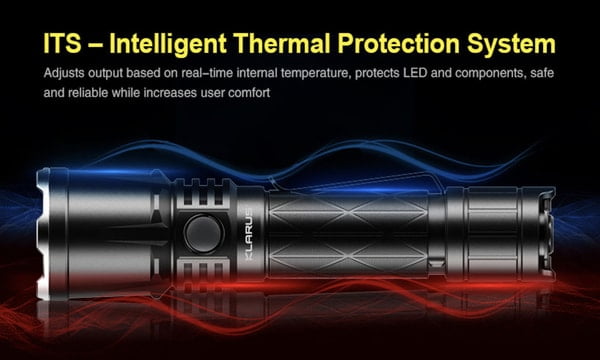
Image: Klarus
Warranty: Klarus lists five years on its current tactical lights, including the XT11GT Pro and XT21X Pro.
Weak spots: a smaller US retail footprint than Fenix or Streamlight, so check who handles warranty service before you buy.
Which Brands Make the Brightest Flashlights?
If raw output is the goal, three brands lead:
- Imalent. The MS18 is rated at 100,000 lumens. 1lumen measured about 101,600 lumens at switch-on and about 69,900 lumens 30 seconds later; it takes 18 LEDs, eight 21700 cells and two cooling fans to get there.
- Acebeam. The X75 is rated at 80,000 lumens and steps down to 30,000 lumens when it gets too hot.
- Nitecore. The EDC37 claims 8,000 lumens from a pocket light, as a short floodlight burst.
For most people, peak lumens is the wrong number to shop on. Sustained output and beam distance matter more, as we explain in lumens vs candela vs beam distance.
How to Judge a Flashlight Brand
ANSI FL1 ratings. Established brands rate their lights to the ANSI/PLATO FL1 standard. Beam distance is where the light falls to 0.25 lux, and runtime is the time until output drops to 10% of the level measured 30 seconds after switch-on. That runtime rule matters: a light can fall from turbo to a fraction of it and still quote a long runtime. Look for runtime tables or graphs, not a single figure.
Honest step-down specs. Good brands say how long the peak lasts. Acebeam lists the E75’s turbo as 4,500 falling to 1,500 lumens after a minute, and says the X75 can hold 20,000 lumens for 20 minutes. A brand that lists only the peak is hiding the part you’ll actually use.
Standard vs proprietary batteries. 18650, 21700, AA and D cells are sold everywhere and can be swapped in the field. Proprietary cells, battery packs and built-in batteries tie you to one maker, and built-in batteries usually shorten the warranty: Nitecore gives 24 months instead of 60, Fenix two years instead of five.
USB-C charging. On a rechargeable light, a USB-C port means any phone cable will do. Magnetic cables are convenient until you lose one. More in our USB-C rechargeable flashlight guide.
Warranty and US support. Read the exclusions and who does the repair. Streamlight’s lifetime cover excludes batteries and limits electronics to two years. Olight’s lifetime cover applies to US purchases made after January 2023. Fenix Lighting US refers Amazon buyers to the seller’s own service center rather than handling the claim itself, and Nitecore and Acebeam route claims through the dealer you bought from. Keep your receipt either way.
Red Flags of No-Name Amazon Flashlight Brands
- Impossible lumen claims. If a fan-cooled searchlight with 18 LEDs and eight 21700 cells tops out around 100,000 lumens, a pocket zoom light claiming 90,000 lumens is fiction.
- Impossible battery claims. Reputable brands ship 18650 cells of around 3,000 mAh (Klarus’s own cell is rated 3,100 mAh, and Wurkkos bundles 3,000 mAh cells). A “9,900 mAh 18650” is not a real rating.
- Missing specs. No runtime table, no candela or beam-distance figure, no IP rating. Brands that follow FL1 publish all of them.
- No warranty page or service address. Every brand in this guide publishes one. If the warranty is “contact seller” and the brand has no website, Amazon’s return window is your real warranty.
- Rotating brand names. The same light and the same photos sold under a different string of capital letters on each listing.
Cheap is fine; anonymous isn’t. A Wurkkos or Sofirn light costs about the same as a no-name one and comes with real specs and a real warranty. Our best EDC flashlights under $50 covers the best of them.
FAQ
What is the best flashlight brand? For most people, Fenix. Its lights, such as the PD36R V2.0, run on standard rechargeable cells, charge over USB-C, are sealed to IP68 and come with five years of free repair. Streamlight is the better value for work and duty use, SureFire is the premium tactical choice, and Wurkkos is the best budget brand.
What is the best torch brand in the UK? The same brands lead in Britain, where “torch” is the usual word. Ledlenser, founded in Germany in 1994, is also worth a look, and its P7 is a common UK police issue light. Buy from an authorized UK dealer, since several brands only honor warranties through their own distributors.
Is Olight better than Fenix? Neither is better overall. Olight makes smaller, more polished pocket lights with magnetic charging and, for US buyers, a lifetime warranty. Fenix rechargeables such as the PD36R V2.0 use standard 21700 cells and USB-C, which suits camping and emergencies better. Our Olight vs Fenix vs Streamlight comparison goes model by model.
Are cheap Amazon flashlight brands worth it? Established budget brands are. Wurkkos and Sofirn sell well-specified lights for $20–$60, and Wurkkos puts a one-year warranty in writing. Anonymous brands with six-figure lumen claims usually aren’t: the specs are invented and there’s rarely any warranty beyond Amazon’s return window.
Which flashlight brands have a lifetime warranty? SureFire and Olight (on US purchases since January 2023) cover the light itself for life, and Streamlight offers a limited lifetime warranty with two years on rechargeable batteries, chargers, switches and electronics. Fenix, Nitecore and Acebeam give five to ten years of free repair, then repair for life where you pay for parts. Maglite now lists ten years and Wurkkos one.
What flashlight brand do police use? In the US, mostly Streamlight, with SureFire second. In the UK, the Ledlenser P7 is the common issue light. Duty lights typically run 800–1,200 lumens; see what flashlights police use for models and civilian equivalents.