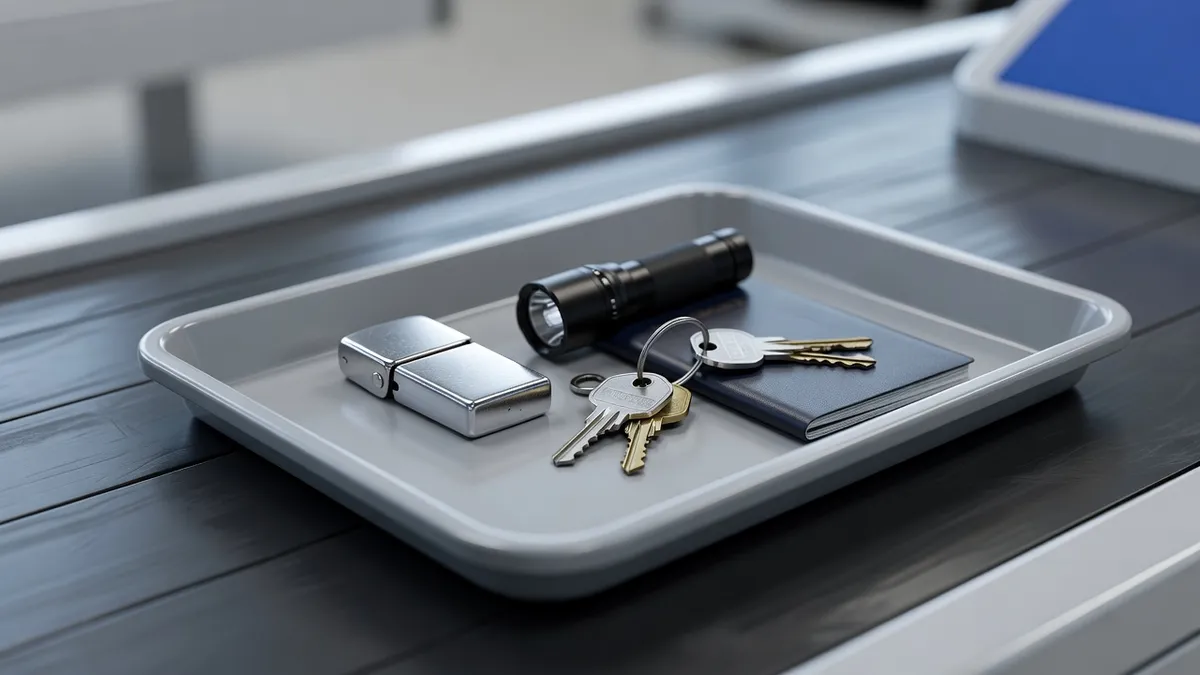
Can You Bring a Lighter on a Plane? TSA & FAA Rules (2026)
Quick answer: Yes — you can bring one standard lighter (disposable BIC-type or a Zippo) in your carry-on or pocket, and flashlights are allowed in both carry-on and checked bags. The big exceptions: torch/jet-flame lighters are banned entirely, lighters generally can’t go in checked luggage, lighter fuel of any kind is prohibited on the plane, and spare lithium batteries must travel in the cabin, never in checked bags.
Here’s the full breakdown so nothing of yours ends up in the airport bin.
Lighters: The Rules at a Glance
| Item | Carry-on / on person | Checked bag |
|---|---|---|
| Disposable lighter (BIC-type) | ✅ Yes (one) | ❌ No* |
| Zippo / fluid lighter | ✅ Yes (one) | ❌ No* |
| Arc / plasma / electronic lighter | ✅ Yes (protected from turning on) | ❌ No |
| Torch / jet-flame lighter | ❌ No | ❌ No |
| Lighter fluid, butane refills | ❌ No | ❌ No |
| Safety matches | ✅ One book | ❌ No |
| Strike-anywhere matches | ❌ No | ❌ No |
*One exception: fueled lighters may go in checked baggage only inside a DOT-approved airtight travel case (sold specifically for this purpose, maximum two lighters), per TSA’s lighter rules. Without the case, keep it on your person.
Why are torch lighters banned?
Jet-flame (torch) lighters burn hotter and more intensely than a normal flame, so the FAA and TSA prohibit them in both cabin and checked baggage — no exceptions, no case. If you travel with cigars, buy a soft-flame lighter for the trip. This ban covers most “windproof” jet lighters, including butane torch inserts. (Standard Zippos with the classic soft flame are fine — see our Zippo safety guide for how they work.)
Arc and plasma lighters
Rechargeable arc lighters are treated as electronic devices with lithium batteries: allowed in the cabin, banned from checked bags, and TSA wants them protected against accidental activation (locked, in a case, or with the safety cap on). Since most arc lighters have a safety lid or a two-step ignition, this is easy to satisfy.
An empty Zippo?
A completely empty, fuel-free Zippo (no fluid, dry wick and cotton) is generally treated as an ordinary metal item and can go in checked luggage. In practice, “empty” is judged by the screener’s nose — if it smells of fuel, expect it to be pulled. When in doubt, carry it on.
Flashlights: Allowed, With Battery Rules
Flashlights themselves are permitted in both carry-on and checked bags — TSA has no problem with a USB-C rechargeable flashlight or a camping torch in either location. The rules that trip people up are about the batteries:
- Installed batteries (inside the flashlight): fine in carry-on or checked. FAA prefers devices with lithium batteries in the cabin, and some airlines require it — cabin is always the safe choice.
- Spare lithium batteries (18650s, 21700s, power banks, loose rechargeables): carry-on ONLY. Never checked. This is a hard FAA rule because a battery fire in the cabin can be handled; one in the hold cannot.
- Protect spare terminals from short circuit: original packaging, a plastic battery case, or tape over the contacts.
- Size limit: batteries up to 100Wh need no approval — every normal flashlight battery is far under this. (A 5,000mAh 21700 is ~18Wh.)
One practical tip: lock your flashlight or remove a battery before flying. A high-powered light switching on inside a packed bag can generate serious heat — the same reason we recommend lockout mode in our flashlight buying guide.
Big “tactical” flashlights with aggressive strike bezels occasionally get extra scrutiny at the checkpoint. They’re not prohibited, but if a screener judges one to be a club-like weapon, it may need to go in checked baggage (with no spare batteries inside, per rule 2).
International Flights
The table above is TSA (US domestic and departures). Most countries follow similar ICAO-based rules — one lighter on person, no fuel, spare batteries in cabin — but some are stricter: several Asian airports confiscate all lighters from cabin baggage, and flights departing or connecting through mainland China ban lighters and matches entirely — on your person, in carry-on and in checked bags, under CAAC rules as EVA Air summarizes them. Check your airline and departure airport before flying internationally with any lighter.
FAQ
Can I bring two lighters? No, not both in the cabin: FAA rules allow one lighter per passenger, in your carry-on or on your person. A second fueled lighter belongs in a DOT-approved case in checked baggage. Empty spares are generally fine.
Can I bring a lighter with no fuel? Yes — empty lighters without fuel or residue are allowed, though screeners have final say.
Do power banks count as spare batteries? Yes — carry-on only, under 100Wh, terminals protected. That includes the power bank feature on some larger camping torches.
Can I take my headlamp? Yes, same rules as flashlights: the device can fly anywhere, spare cells go in the cabin.
What happens if TSA finds a banned item? You’ll be offered the usual options: return it to your car, hand it to a non-flying companion, mail it (at some airports), or surrender it. Torch lighters and fuel cans are surrendered at the checkpoint every day — cheaper to leave them home.
Traveling to go camping? Pack a legal setup: a rechargeable flashlight with the battery installed, an arc lighter with its safety cap, and buy your lighter fluid at the destination.