How Many Lumens Should a Flashlight Have? Real Numbers by Use
Quick answer: For one all-purpose flashlight, 300–1,000 lumens covers almost everything. Around the house you’ll use 20–100, walking the dog or hiking 200–500, and only searching far away needs 1,000+ plus a high candela rating. Pick a light with a long-running low mode, such as the Fenix PD36R V2.0 (1,700 lumens max), or an AA light like the Streamlight ProTac 2AA-X.
The lumen number on the box is the maximum, and it’s the setting you’ll use least. The level you actually live on is lower, and how long the light holds it matters more than the headline figure. Below are realistic numbers for each job, then what a lumen rating does and doesn’t tell you.
How Many Lumens Do You Need? Numbers by Use
| Use | Lumens you need | Also check | Runtime to look for |
|---|---|---|---|
| Reading, around the house | 20–100 | Wide beam; a low mode you can reach first | 10+ hours at that level |
| Emergency kit, power outage | 5–50 on low, 200–400 on high | Common batteries (AA) or USB-C | 50+ hours on low |
| Walking the dog | 200–400 | 3,000–10,000 cd (about 110–200 m of rated throw) | The whole walk, 1–2+ hours |
| Camping (around camp) | 20–80, ideally from a headlamp | Flood beam, red mode | A low mode that lasts the weekend |
| Hiking at night | 200–500 | Mixed beam; hands-free is easier | 3+ hours without stepping down |
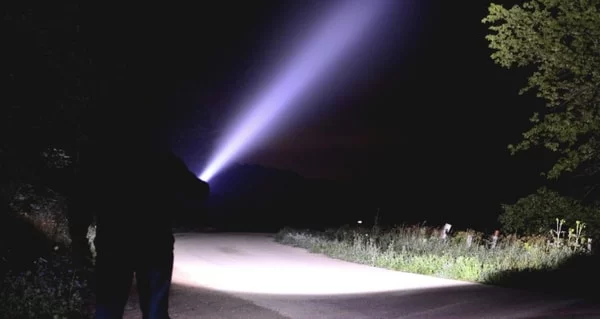
| Searching, property checks | 1,000–2,000+ | 20,000+ cd (about 280 m); candela matters more than lumens | Turbo lasts minutes; check the sustained level |
| Tactical, self-defense | 500–1,000+ | 10,000+ cd; tail switch that goes straight to high | Short bursts; runtime is secondary |
The candela figures convert to rated beam distance with one formula: beam distance in meters = 2 × √candela. So 10,000 cd is a 200 m beam. Useful seeing distance is shorter than the rated figure, which is explained in lumens vs candela vs beam distance.
Around the House and in a Power Outage: 20–100 Lumens
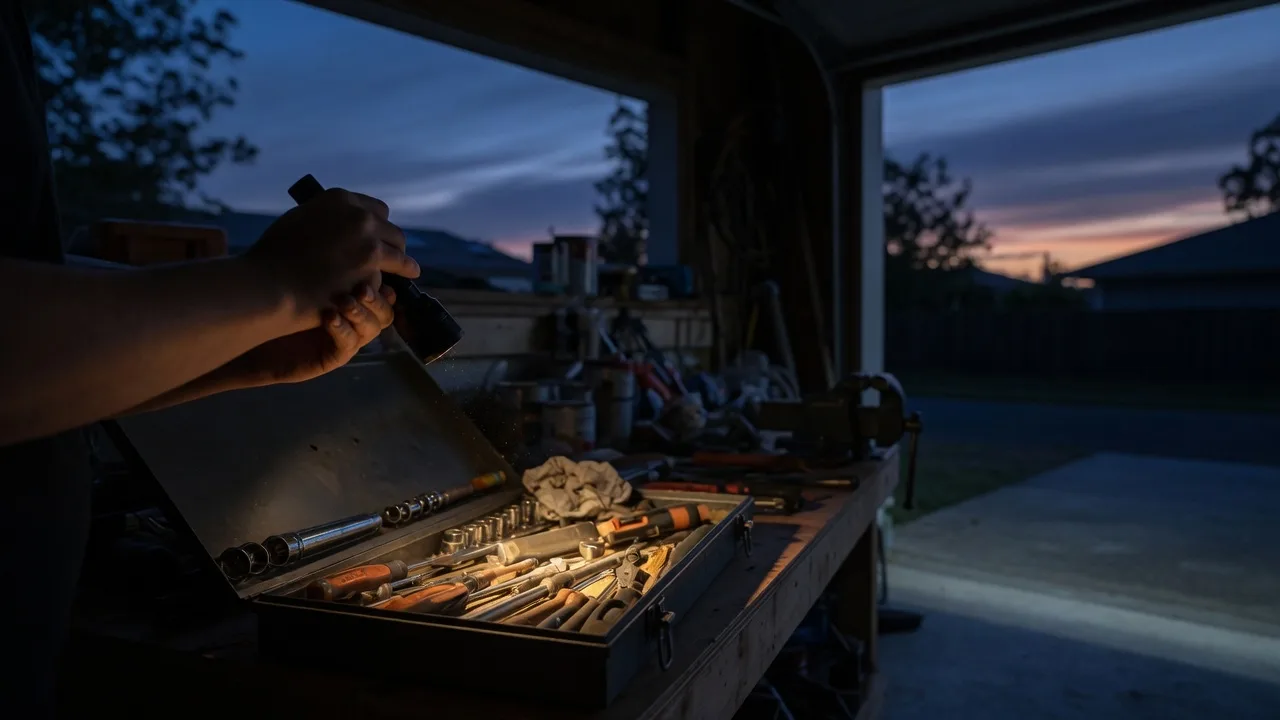
Under the sink, at the breaker panel, in a closet, on the way to the bathroom: household jobs happen within a few feet. At that distance 20–100 lumens is plenty, and much more bounces off white walls and glares back at you. The feature that matters is a light that starts on a low mode. The Fenix E20 V2.0, a two-AA light, always starts on low, so you’re not dazzled at 2 a.m.
For a blackout, runtime beats brightness. The PD36R V2.0 is rated for up to 482 hours on its lowest mode, a 5-lumen Eco setting. On two AA alkalines, the ProTac 2AA-X runs 18 lumens for 48 hours. Either one gets you through a multi-day outage on one charge or one set of batteries. Our power outage guide covers the whole kit, including lanterns.
Walking the Dog, Camping and Hiking: 200–500 Lumens
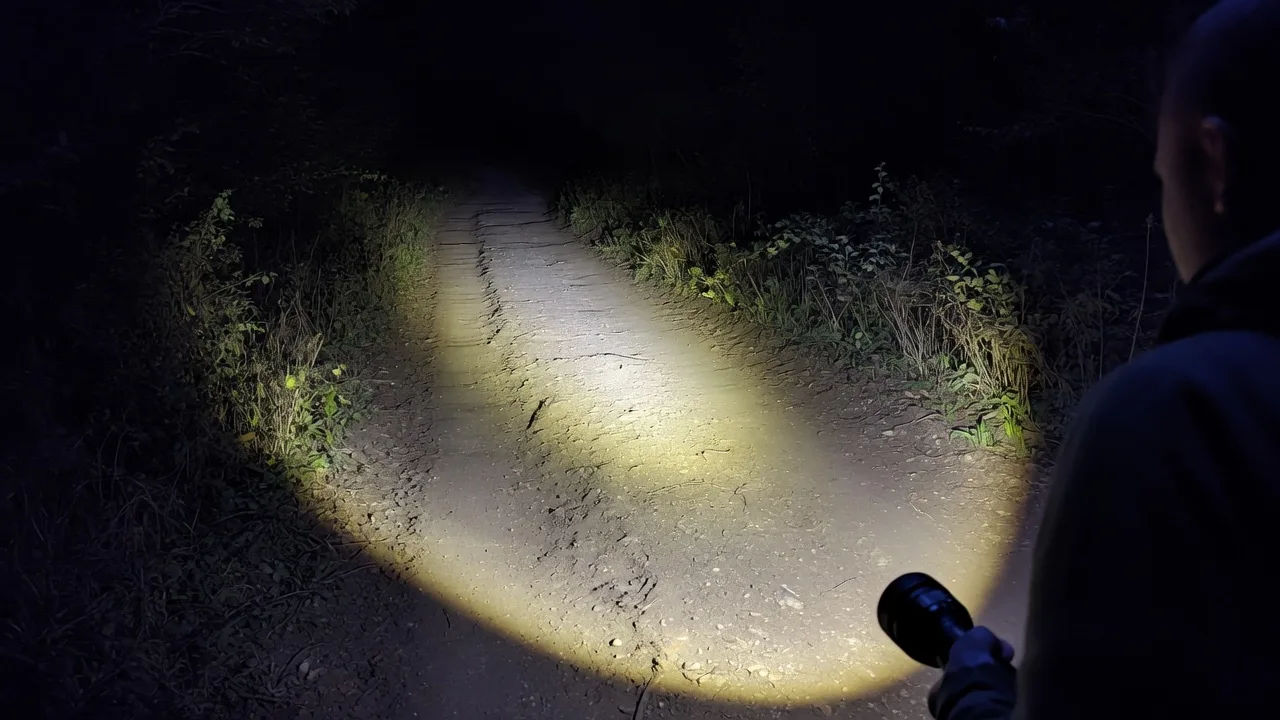
Walking the dog: 200–400 lumens lights the sidewalk and lets you pick out a loose dog or a person well before you reach them. On two AA batteries the ProTac 2AA-X makes 270 lumens and 5,000 cd, for a rated 141 m beam and 2.5 hours on high. That’s more than a suburban street needs.
Camping: around camp you’ll use far less than you think. Cooking, pitching the tent and finding things in the pack take 20–80 lumens, and a headlamp with a red mode does it better than any handheld. Use 200–400 lumens for walking to the restroom, and save 500+ for seeing across a clearing. More in what is the best torch for camping.
Hiking at night: 200–500 lumens with a mixed beam that lights both the trail at your feet and the next turn. What matters is whether the light holds that output for hours. Check the runtime at the mode you’ll use, not the turbo figure.
Searching and Seeing Far: 1,000+ Lumens, but Read the Candela
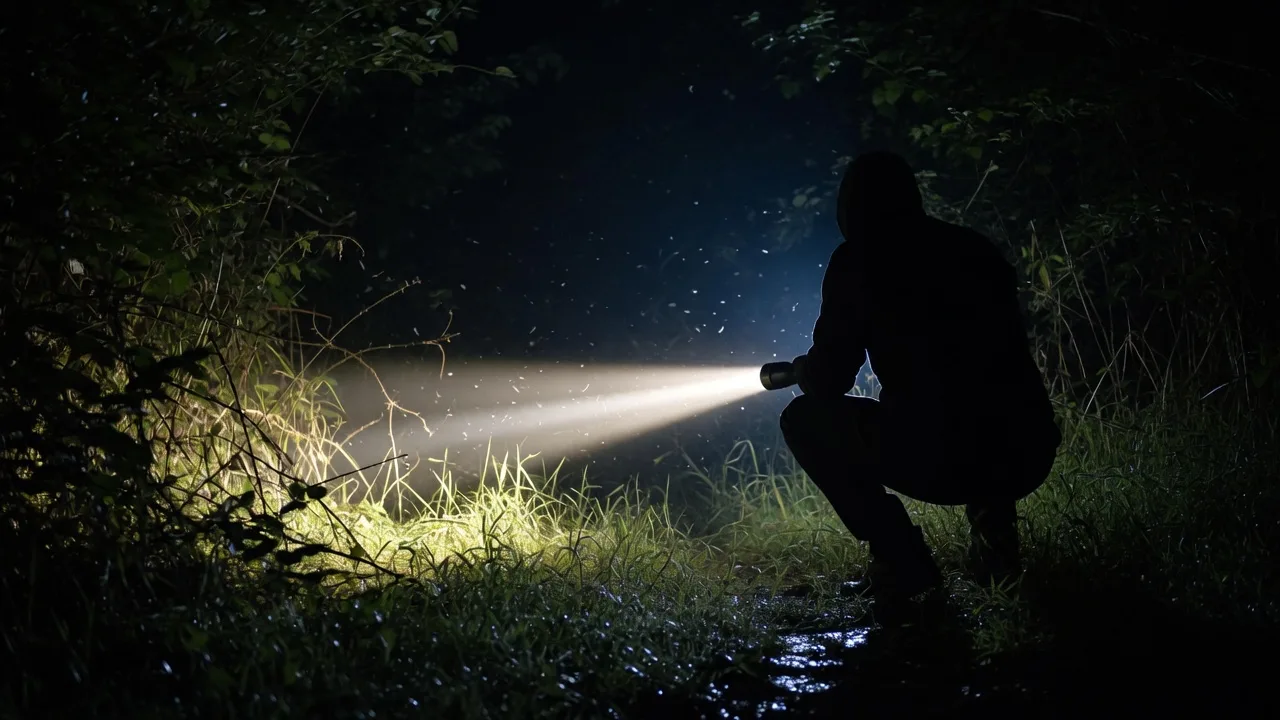
Checking a noise at the tree line, finding a lost pet in a field, scanning a boat ramp: this is where big lumen numbers earn their keep. Even here, candela decides the reach. For a real 100–150 m of usable light you want roughly 20,000 cd or more, which works out to about 280 m of rated beam. Search and rescue or marine use calls for 50,000 cd and up.
Big outputs are temporary. The PD36R’s maximum is 1,700 lumens and a 396 m beam, and Fenix says it steps down a few lumens once it reaches 60°C/140°F to shed heat. Most high-output lights behave the same way, so plan around the level the light can sustain. Our brightest affordable flashlights page and a search for long-throw, high-candela flashlights are the places to start.
Tactical, Self-Defense and Work: 500–1,000+ Lumens
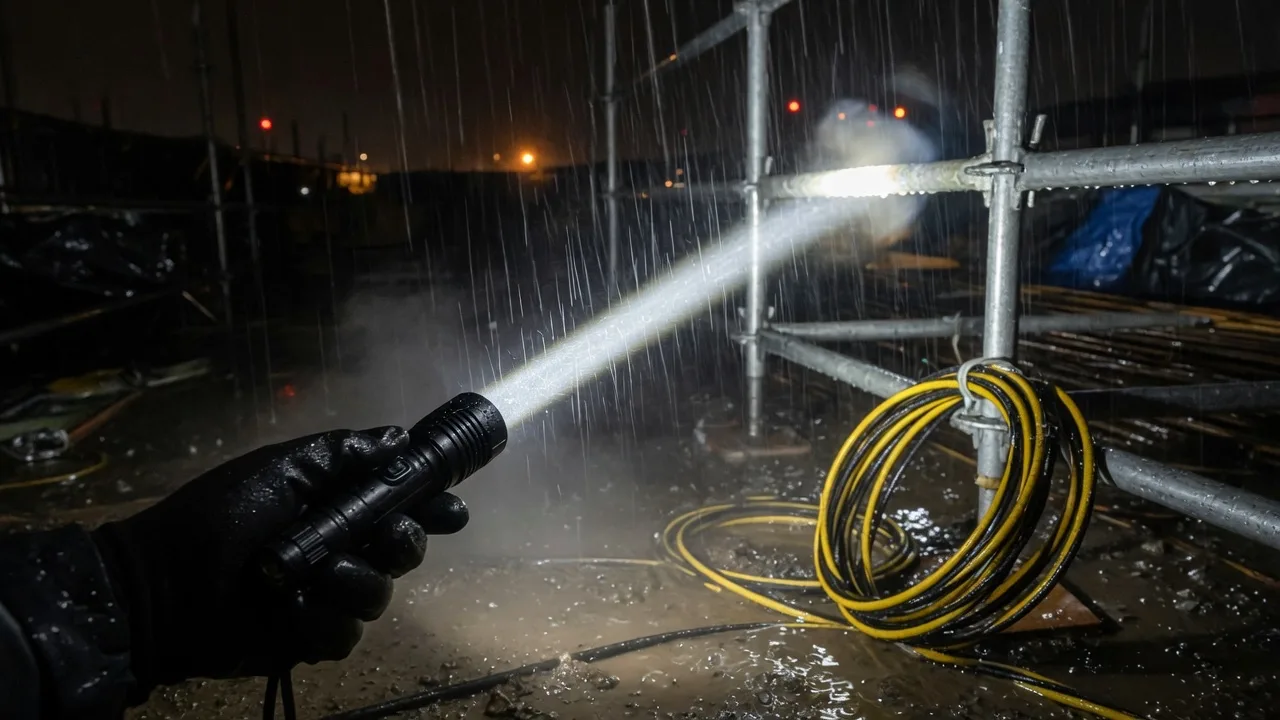
For a defensive light, output alone isn’t the point. You want a tight, intense beam (10,000+ cd) so you can see hands and faces at a distance, and a tail switch that goes straight to full power. The ProTac 2AA-X, for example, has a “High Only” program so the first press is always maximum. A bright beam in someone’s eyes can make them hesitate and look away, but treat that as a bonus, not a plan.
For trade work, the opposite applies: 100–500 lumens in a wide flood beam, ideally with high color rendering (CRI) so wiring colors look right. A magnetic tail or clip is worth more than extra lumens here.
Why Lumens Alone Can Mislead You
What an ANSI FL1 lumen rating actually measures
Reputable brands rate their lights to ANSI/PLATO FL 1, the flashlight standard behind the small icons on the box. Per Streamlight’s summary of the standard:
- Light output (lumens) is the total light, taken 30 seconds after switch-on with fresh batteries.
- Runtime runs from the output at 30 seconds after switch-on until the light drops to 10% of that value. A “4-hour” light spends a good part of that time much dimmer than its rated output.
- Beam distance is where the beam falls to 0.25 lux, about the light of a full moon.
- Peak beam intensity is in candela, the brightest part of the beam.
Two catches: following the standard is voluntary, and each company runs its own tests. A light with no FL1 marking may quote “LED lumens” that never come out of the front. According to Safariland’s guide to the standard, the 2025 revision adds testing for short-duration turbo modes, so makers have to disclose how long those peak levels last.
Lumens aren’t reach
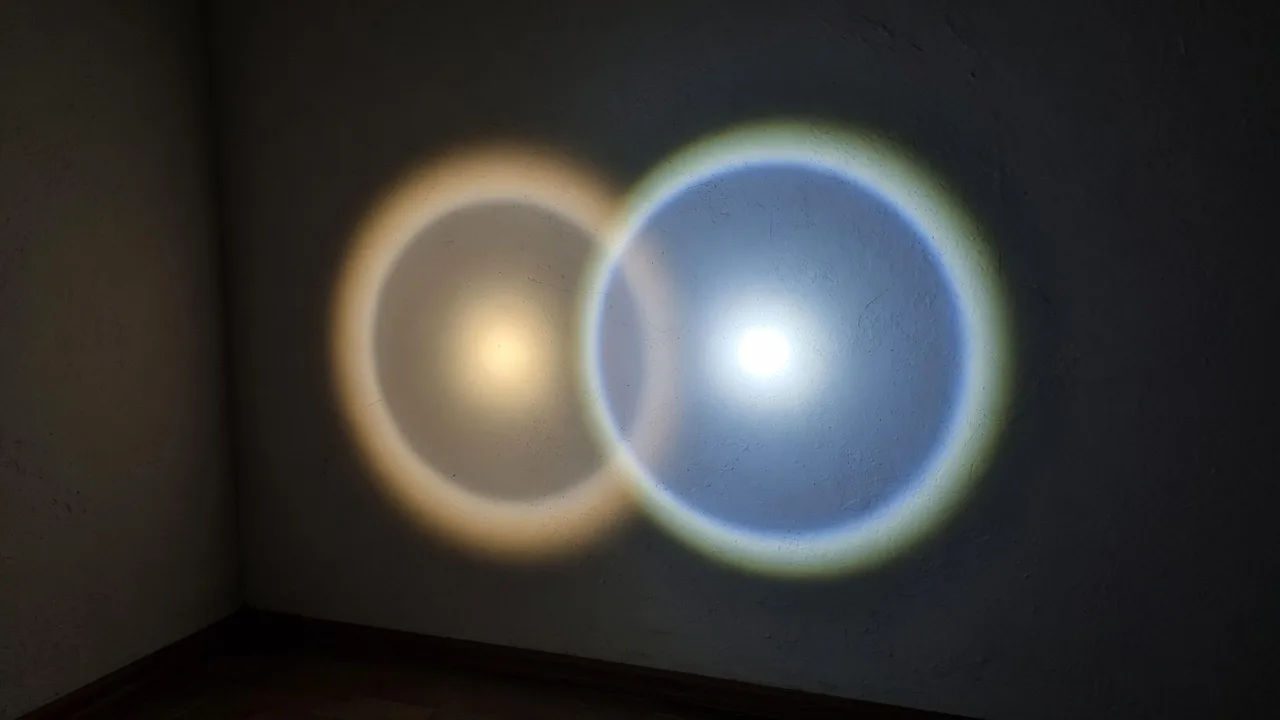
Lumens are the total amount of light. Candela is how tightly it’s focused. The ProTac 2AA-X shows the difference well: on AA batteries it’s 270 lumens and a 141 m beam. On its rechargeable pack it doubles to 550 lumens, but the beam only grows to 203 m, about 44% farther. Doubling lumens also looks brighter to your eye, but nowhere near twice as bright. A wide flood and a tight thrower with the same lumens do completely different jobs. The full explanation, with the math, is in lumens vs candela vs beam distance.
Turbo is a sprint
The top lumen figure is measured at 30 seconds. After that, heat and battery voltage pull most lights down to a lower sustained level. Compare lights on that sustained level and the runtime at the mode you’ll really use.
The battery changes the number
The same light can post different specs on different cells. The ProTac’s 270-versus-550 lumens is one example. If a light takes more than one battery type, check which one the headline figure was measured on.
Example Flashlights at Three Lumen Levels
| Fenix E20 V2.0 | Streamlight ProTac 2AA-X | Fenix PD36R V2.0 | |
|---|---|---|---|
| Max output | 350 lm | 270 lm on AA; 550 lm on its USB-C pack | 1,700 lm |
| Rated beam distance | 126 m | 141 m on AA; 203 m on the pack | 396 m |
| Longest runtime | Up to 200 hours (lowest mode) | 48 hours at 18 lm (AA) | Up to 482 hours (5 lm Eco) |
| Battery | 2 × AA | 2 × AA or 1 rechargeable pack | 21700 Li-ion, USB-C charging |
| Water rating | IP68, to 2 m | IPX7, to 1 m | IP68 |
| Good for | House, car, emergency kit | Dog walks, everyday carry | Camping, searching, one light for everything |
| Buy | Check price | Check price | Check price |
Specs are from the Fenix E20 V2.0, ProTac 2AA-X and PD36R V2.0 product pages. For cheaper everyday options, browse AA LED flashlights and apply the checklist below, or see our best EDC flashlights under $50.
What Else to Look For Besides Lumens
- Body material and impact rating. Aluminum is the default for handheld lights because it’s light, strong and pulls heat away from the LED. Better lights use a hard-anodized finish: both Fenix lights above are A6061-T6 aluminum with a Type III hard-anodized coat. Polymer bodies are lighter and don’t feel cold in winter. Headlamps are mostly plastic to save weight. Check the ANSI impact figure, too; the ProTac is drop-tested to 2 m.
- Water resistance. Read the actual code, as defined in IEC 60529 and used by FL1. For camping, boating or storm duty, get IPX7 or better.
- IPX4: splashing water from any direction. Fine in rain.
- IPX7: temporary immersion to 1 m for 30 minutes.
- IPX8: continuous immersion beyond 1 m, under conditions the manufacturer specifies. It is not a fixed “2 m for 30 minutes”, so look for the stated depth. Fenix, for example, rates the E20 V2.0 waterproof to 2 m.
- Battery type.
- AA/AAA: sold everywhere and easy to stockpile. Alkalines can leak in storage, so pull them from lights you rarely use. Energizer rates its Ultimate Lithium AA cells for -40°F to 140°F, which makes them the pick for a car or winter kit.
- CR123A: compact lithium primaries common in tactical lights.
- 18650/21700 lithium-ion: rechargeable cells behind most lights over 1,000 lumens. Swappable cells beat built-in batteries because you can carry a spare.
- Beam type. A flood lights a wide area up close, a thrower reaches far, and a mixed beam does a bit of both. Match it to the job before comparing lumens.
- Modes and interface. A genuine low mode, a way to reach it without flashing through turbo, and a lockout so it doesn’t switch on in a bag. Simple lights like the E20 V2.0 start on low; tactical lights like the ProTac can be set to start on high. Avoid lights that make you cycle through strobe to get anywhere.
- Regulated output. A regulated driver holds brightness steady as the battery drains; Fenix lists a “digitally regulated circuit” on the E20 V2.0. Cheap unregulated lights start bright and fade the whole time.
- Warranty. Fenix and Streamlight both offer limited lifetime warranties on the lights above. Check what a cheaper light’s warranty covers before you buy.
- Headlamp or handheld? A headlamp keeps your hands free for chores and cooking. A handheld is better for aiming a beam at distance. Many people are best served by owning one of each.
FAQ
Is 1,000 lumens enough for a flashlight? Yes, for almost every civilian use. It’s far more than you need indoors or around camp, and it’s plenty for property checks. What 1,000 lumens doesn’t guarantee is reach: a floody 1,000-lumen light can throw less than a 500-lumen thrower, so check candela if distance matters. Also check how long it holds 1,000 lumens before stepping down.
Is 100 lumens bright? For close work, yes. 100 lumens easily lights a room, a closet or the inside of an engine bay, and it’s comfortable for reading. It won’t show you much across a yard or down a trail, where 200–500 lumens is the better range.
How many lumens do I need for self-defense? Aim for 500–1,000+ lumens with a focused beam of 10,000 cd or more, and a tail switch that goes straight to maximum. The beam’s job is to let you see and identify, and a bright light can make someone hesitate. Treat any disorienting effect as a bonus, not a guarantee.
How many lumens do I need for camping? Around camp, 20–80 lumens from a headlamp covers cooking and tent chores. Use 200–400 lumens for walking at night and 500+ only for seeing across a clearing or lake. A long low-mode runtime matters more than the maximum.
Are more lumens always better? No. Past what the job needs, extra lumens cost runtime, heat and money, and a very bright light up close causes glare. For distance you want candela, not lumens. For everyday tasks you want a good low mode and a long runtime.
What does ANSI mean on a flashlight? It means the specs were measured to the ANSI/PLATO FL 1 standard: output at 30 seconds after switch-on, runtime until output falls to 10%, beam distance to 0.25 lux, plus impact and water ratings. It makes brands comparable, but compliance is voluntary and each company tests its own lights.