How to Make a Lighter at Home: 2 Safe DIY Methods
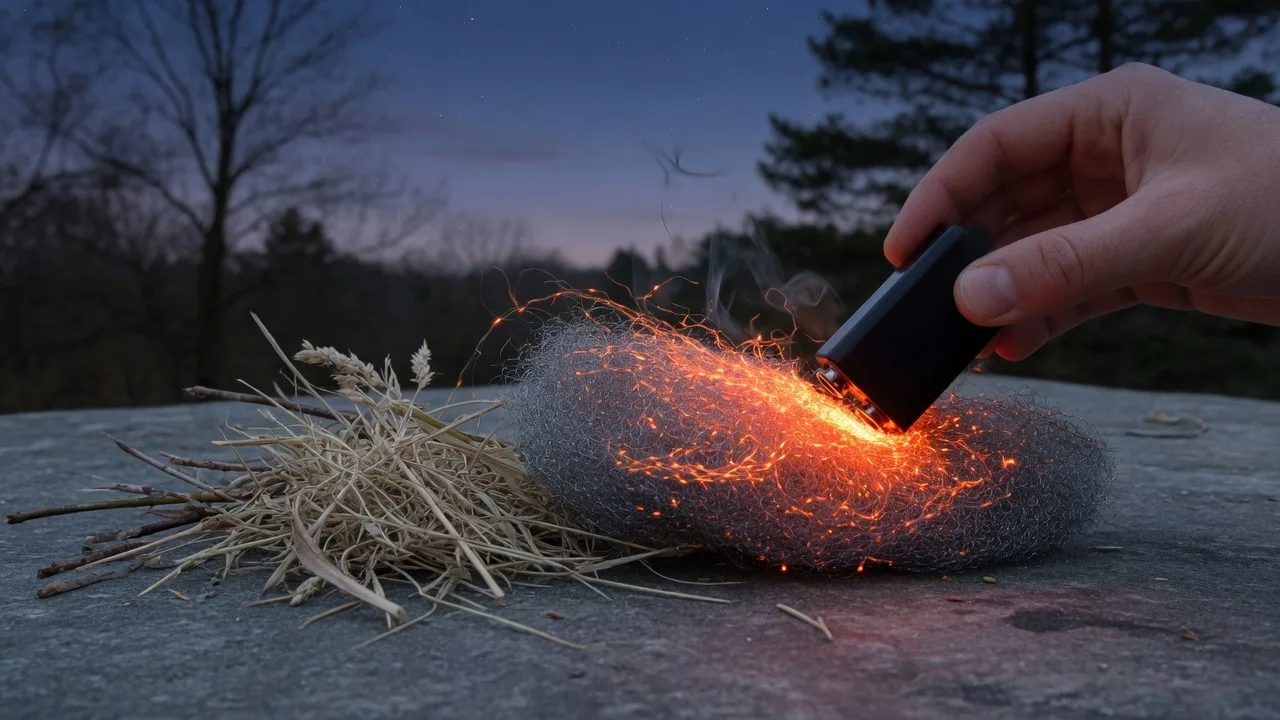
Quick answer: The safest homemade lighter is a fuel-free spark lighter for a gas stove. Take the piezo igniter out of an empty push-button lighter (or buy a replacement piezo igniter), mount it in a short length of plastic pipe, and wire it to two metal tips a few millimetres apart. Each press throws a spark that lights the stove’s gas. For starting a fire outdoors, a 9-volt battery and fine steel wool makes a glowing ember in seconds. What you shouldn’t build is anything that stores fuel.
Both methods below make a spark or an ember, not a flame, so there’s nothing to leak and nothing under pressure.
Why Not Build a Lighter That Holds Fuel?
A disposable lighter looks simple, but it’s a sealed pressure container. Its tank holds liquefied gas, its valve has to seal every time, and in the US it has to pass a federal child-resistance standard. BIC doesn’t even sell component parts for its lighters. A homemade fuel lighter has none of that: no pressure-rated tank, no reliable valve and no child guard. The risks are leaks, flare-ups and burns, for a tool that costs a few dollars to buy.
Method 1: A Piezo Spark Lighter for Your Stove
This is the kitchen “gas lighter”: a long body with a button that makes a spark at the tip. It has no fuel of its own. The stove’s gas does the burning. How the igniter inside works is covered in how does a lighter work?
You’ll need:
- A piezo igniter. Either salvage one from a dead push-button lighter, or buy a replacement piezo igniter button. Grill-replacement igniter kits often include the lead wire and an electrode, which makes this much easier.
- About 6 inches (15 cm) of narrow PVC pipe, or any rigid plastic tube. It has to be plastic, not metal, so it doesn’t carry the spark to your hand.
- Insulated wire and two small metal tips. Straightened safety-pin shafts work.
- Electrical tape, glue and an end cap (a bottle cap is fine).
Steps:
- Make sure the donor lighter is empty. Outdoors and away from flames, hold its button or valve down until no more gas hisses out. Never cut into a lighter that still has fuel in it.
- Remove the igniter. Take off the button and cover and pull out the piezo unit, keeping its wire attached.
- Mount it in the pipe. Cut a hole near one end of the pipe just big enough for the igniter to sit snugly with the button sticking out.
- Run two wires down the pipe. A piezo igniter needs a return path. Connect one wire to its output lead and the other to its metal body or second terminal. Tape each connection.
- Make the spark gap. At the far end, fix the two metal tips so their points sit about 3–4 mm apart. Tape or glue them firmly so the gap can’t shift. A piezo spark can cross a gap of a few millimetres, as explained in how many volts is a gas lighter spark.
- Test it in a dim room. Press the button: a blue-white spark should jump between the tips. If it doesn’t, move the tips a little closer and try again. Then cap the open end.
- Use it spark-first. Hold the tip at the edge of the burner and start clicking before you turn the knob to low, so the spark is already there when the gas arrives. The full routine is in how to light a gas stove manually.
Good to know: if you touch the tips while pressing, you’ll get a sharp snap. It’s startling but harmless, as we explain in why a gas lighter shocks you. Keep the tips dry, and never use it to light a modern gas oven.
Honestly, a ready-made piezo stove lighter costs a few dollars and is sturdier. Building one is worth it as a project, or to reuse a lighter you’d otherwise throw away.
Method 2: A 9-Volt Battery and Steel Wool
This isn’t a kitchen tool. It’s a well-known way to start a campfire without a lighter or matches. Very fine steel wool (grade #0000) is made of strands thin enough that a battery’s current heats them until they glow and burn.
- Prepare your fire first. Have dry tinder and small kindling ready, outdoors, on bare ground or in a fire ring.
- Fluff out a small pad of the finest steel wool you can find.
- Touch both terminals of a 9-volt battery to the wool. The strands between the terminals glow red almost instantly and the glow spreads.
- Move the glowing wool into the tinder and blow gently until it catches.
- Put the battery away from the steel wool straight away.
That last step matters. The Colorado Springs Fire Department specifically warns against storing steel wool near 9-volt batteries, because if both terminals touch it, it can start a fire. That’s the same reaction, just unplanned. Keep a 9-volt in your fire kit with its terminals taped or capped.
Or Skip the DIY: Fire Starters That Never Need Fuel
| Option | What it makes | Stored fuel? | Best for | Main risk |
|---|---|---|---|---|
| DIY piezo spark lighter | A spark | None | Lighting a gas stove | A harmless zap |
| 9V battery + steel wool | A glowing ember | None | Starting a campfire | Burns and stray embers |
| Ferro rod | A shower of hot sparks | None | Campfires, emergency kits | Low |
| Arc lighter | An electric arc | None (rechargeable) | Candles, stoves, camping | Battery runs down |
| Homemade fuel lighter | A flame | Yes | Don’t build one | Leaks, flare-ups, burns |
A ferro rod is made of ferrocerium, the same material as the “flint” in a disposable lighter, just much bigger. Scrape it with a steel striker and it throws hot sparks, strike after strike, for years. For campfires it’s the most reliable fuel-free tool there is.
FAQ
Can you make a lighter at home? Yes, safely, if it doesn’t hold fuel. A piezo spark lighter for a gas stove is a simple afternoon project, and a 9-volt battery with steel wool will start a campfire. Building a lighter that stores butane or fluid isn’t worth the risk.
How do you make a lighter with a battery? Touch both terminals of a 9-volt battery to a pad of very fine (#0000) steel wool. The thin strands heat up and glow, and you can blow that ember into a flame in dry tinder. Do it outdoors, and store the battery away from the wool afterwards.
Can you make lighter fluid at home? Don’t. Lighters are designed around one specific fuel. Substitutes like gasoline or rubbing alcohol burn very differently, and in a Zippo they’re a genuine hazard. Buy the right fuel: lighter fluid for wick lighters, refined butane for gas lighters.
How do you make a lighter work again? Most “dead” lighters aren’t broken. A butane lighter that sparks but won’t light usually has air in the tank or is too cold. See how to fix a lighter that won’t light, or how to fill a butane lighter if it’s just empty.
Is a homemade spark lighter safe to use on an oven? No. Modern gas ovens use a glow-bar igniter connected to a safety valve and shouldn’t be lit by hand at all. Use a homemade or store-bought spark lighter on stovetop burners only.